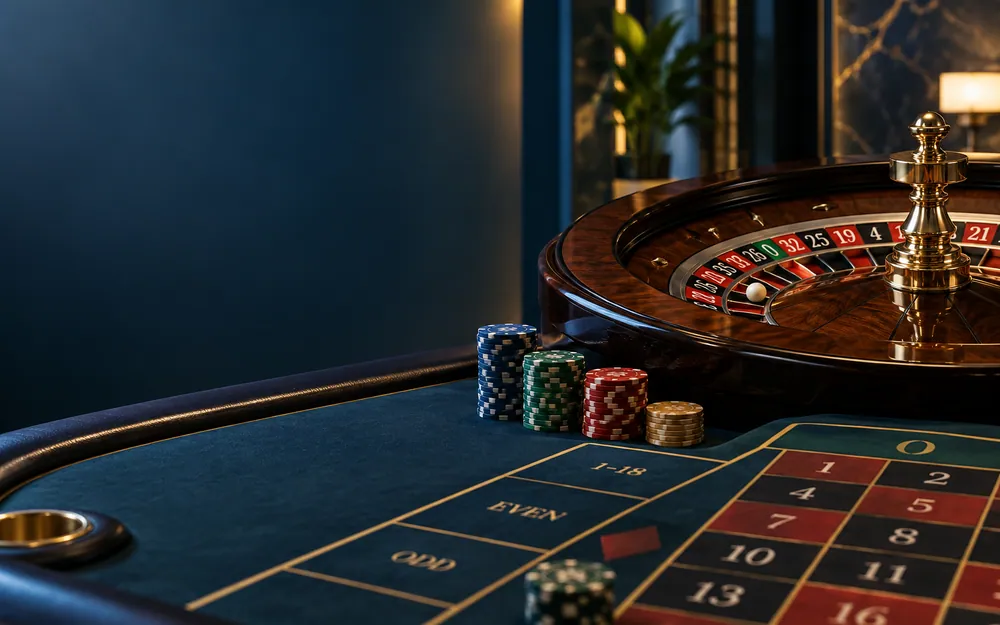
The first useful decision is made before a chip touches the layout: count the zero pockets. European-style roulette has numbers 1–36 plus a single zero. A double-zero wheel adds 00 without increasing standard even-money payouts, so the extra pocket increases the house edge.
Roulette remains a durable casino query and appears in current major-venue game lists, including Crown Melbourne and The Star properties. Physical tables, rapid roulette and fully automated terminals may use different minimums, pace and procedures, so identify the format as well as the game name.
How a spin is settled
Players place wagers on a numbered layout before the dealer announces no more bets. The ball and wheel move in opposite directions, and the winning pocket determines which wagers are paid. Chips must remain untouched until losing wagers are cleared and the dealer marks the winning number.
Electronic and stadium versions may use a physical wheel feed, an automated wheel or a virtual result depending on the product. Read the terminal information and approved rules. A faster interface can create far more turnover than a social table even when each individual stake looks small.
Inside bets and outside bets
Inside wagers cover specific numbers or small groups such as splits, streets and corners. They win less often and pay more when successful. Outside wagers cover larger groups such as red or black, odd or even, dozens and columns. None is a prediction tool; each is a different distribution of the same wheel risk.
On a standard single-zero wheel, the zero creates the casino advantage because even-money wagers lose when zero appears unless a special rule applies. A large payout on a straight-up number reflects its low hit probability; it is not evidence that the bet offers better value.
Why wheel type matters more than colour history
A single-zero wheel usually produces a house edge of about 2.7% on standard bets. A conventional double-zero wheel usually raises that to about 5.26%. Special bets and rule variations can differ, so use these figures as a comparison prompt rather than a substitute for the actual table rules.
A display showing previous reds, blacks and numbers is a record, not a forecast. Independent spins do not compensate for a long run. The chance of red on the next standard spin is set by the wheel, not by how many black results appeared beforehand.
Why Martingale and other systems fail
A Martingale doubles an even-money wager after each loss in the hope that a later win recovers prior losses plus one unit. It does not alter the zero or the probability of the next spin. Instead, stakes grow rapidly until the bankroll or table maximum prevents the next step.
Fibonacci, cancellation and hot-number systems have the same core limitation: they reorganise bet size or selection without changing expected value. A system can produce many small winning sessions and rare severe losses, which may feel successful until the full distribution is recorded.
Table chips and live etiquette
At many roulette tables, each player receives colour chips with a value set at buy-in. Confirm the value and cash them at that table before leaving because they may not behave like ordinary casino chips. Place complicated announced bets early and do not reach across the layout after betting closes.
If the table is crowded, ask the dealer how to position a chip precisely rather than leaning over other players. Keep drinks away from the layout, wait until the marker is removed after a result, and do not blame the dealer or other patrons for a number.
Set a roulette budget using spins, not hope
Estimate the number of spins, average total stake per spin and session duration. Several chips placed across the layout are one combined wager. A person placing five $2 chips per spin is staking $10, not $2, and a rapid terminal can repeat that exposure quickly.
Use a fixed total-spend limit and a finish time. Avoid increasing stake to restore the opening balance, and do not treat a near miss as information. If the preferred single-zero table is unavailable at an affordable minimum, walking away is a valid game decision.
- Count the zero pockets
- Add all chips to find the real spin stake
- Ignore history-board patterns
- Do not chase with progressive systems
- Stop at the planned time or loss limit
Choosing between live and electronic roulette
Live tables provide a slower social procedure and dealer oversight, but may carry higher minimums. Electronic terminals can allow smaller denominations and more privacy, while their faster cycle and repeat-bet button can raise turnover. Neither format changes the need to read the exact rules and result source.
Choose the format that makes the limit easier to keep, not the one that creates the most spins. Watch a full cycle before staking, locate the total-bet display and make sure the cash-out process is clear. If speed makes spending difficult to track, stop rather than relying on the balance animation.
Quick answers
Frequently asked questions
Is European roulette better than American roulette?
A standard single-zero wheel normally has a lower house edge than a standard double-zero wheel because there is one fewer losing zero pocket.
Can previous spins predict the next colour?
No. The history display describes past results and does not make red, black or a specific number due.
Do roulette systems work?
They can change bet size and the pattern of wins and losses, but they do not remove the house edge.
Are electronic roulette odds different?
They can be if the wheel, rules or product differs. Check whether the result is live, automated or virtual and read the posted paytable.
Primary sources
Check the current information
Rules, venue conditions and regulatory status can change. These links go to official organisations or the venue itself.