
WinCrown · Welcome bonus200 free spins on selected slots
Reviews (9,827)
4.9Rating
The complete list
 Best casinos available in AustraliaUpdated 8 November 2026
WinCrown · Welcome bonus200 free spins on selected slots
Reviews (9,827)
4.9Rating
Yes, you can fund a real money casino with PayID from an Australian bank account, and many offshore sites aimed at Australians list it in the cashier. PayID is a genuine banking feature, so the transfer itself is real and usually lands within a minute. What it does not do is make the casino Australian, licensed here or answerable to an Australian regulator.
The conditions are worth knowing before you send anything. You need an account with a bank or credit union that supports PayID, the payment goes in Australian dollars to a PayID the site shows you, and the name on your bank's confirmation screen is often a payment company rather than the casino. Minimum deposits, daily limits and holds on first-time payments are set partly by the site and partly by your own bank. Withdrawals are a separate arrangement: a site that takes PayID deposits does not necessarily pay out the same way, so check both directions.
Not travelling to a venue?
Everything on this page is a licensed Australian property with a named regulator. If you are weighing up an online option instead, that is a different category with a different trade-off — compare the terms page, not the headline.
PayID is an addressing service. Instead of typing a BSB and account number, you send money to something easier to remember: a mobile number, an email address or an ABN that the recipient has linked to their account through their bank. It runs on the New Payments Platform, the infrastructure Australian banks use for near-instant transfers at any hour, including weekends.
Three names get mixed together on gambling sites, so it helps to separate them.
The part that marketing leaves out: PayID is not a wallet, not a brand of casino and not a seal of approval. Nobody at PayID vets the businesses that register an address. Any Australian account holder can create one in a couple of minutes. A site that calls itself a 'PayID casino' is describing a way to receive money and nothing more, which is the point our page on whether PayID is a payment claim or a red flag goes into.
This is the question that matters most, and PayID gives you an unusually good tool for answering it. Before a PayID payment is sent, your banking app shows the name registered to that PayID. That name comes from the recipient's bank, not from the casino's website.
With an offshore casino, the name is almost never the casino's. Typically it is a payment intermediary, a small company or a sole trader with an Australian account, which collects deposits and passes the value on. Some sites rotate through several PayIDs in a week. From the player's side this has three consequences.
So treat the confirmation screen as a checkpoint, not a formality. If the name displayed does not match the name the cashier told you to expect, stop and ask support. If the cashier gave you no name at all, that is an answer in itself.
The payment being domestic does not change the legal status of the service you are paying for.
Licensed online wagering on sport and racing is a different, legal category with Australian regulators behind it. The ten land-based casinos this site reviews are another. A real money online casino that takes Australian deposits falls in neither. The detail is on our pages about online casino legality and how to check a gambling operator.
To send a PayID payment you do not need a PayID of your own; any account at a participating bank can pay one. You need your own only to receive money, which for a casino player means withdrawals.
Creating one takes a few minutes inside your bank's app or internet banking. Look under settings or payments for a PayID menu, choose your mobile number or email address, confirm the code the bank sends you, and pick the account it should point to. The name other people see is set by the bank from your account name. You cannot type in a nickname, which is exactly why the name check is worth something.
If a site asks you to create a PayID in a particular way, to register it at a bank you do not use, or to 'link' it through a form on their page, close the page. None of that is how the service works.
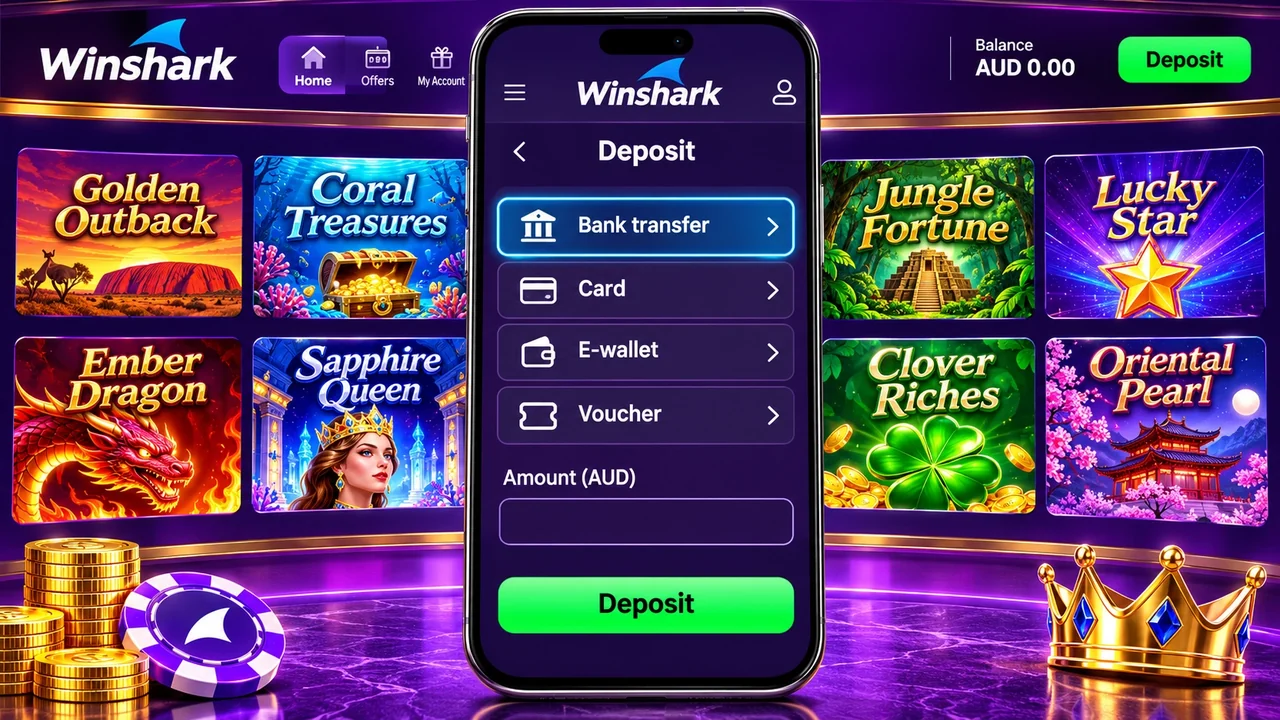
The flow is much the same on every site that offers it. What differs is how carefully the player reads each screen.
Most deposits show in the casino balance within minutes. If yours has not arrived after an hour, send support the receipt rather than paying a second time. Two payments for one deposit are far harder to untangle than one late one.
The casino sets a minimum and maximum per deposit. Your bank sets a daily limit on PayID and Osko payments, and it is often lower for new payees or new devices. If a payment is declined in the banking app, the cause is on the bank's side. Raising the limit is done in the app or by calling the bank, and some banks apply a waiting period before a higher limit takes effect.
A fast deposit says nothing about the payout. Taking money in is the easy half for any operator. Before a first deposit, find the withdrawal section of the cashier and the payments page of the terms and look for four things.
When a payout is sent to your PayID, it arrives the same way any transfer does, and the sender name on your statement will again be an intermediary. The name on your casino account has to match the name on the receiving bank account; payouts to someone else's PayID are refused almost everywhere.
If a bonus is active, the withdrawal may be blocked or reduced until wagering is complete, whatever the payment method. That is a terms issue, covered in our guide to casino bonus terms. What 'easy withdrawal' can realistically mean is looked at in a separate article.
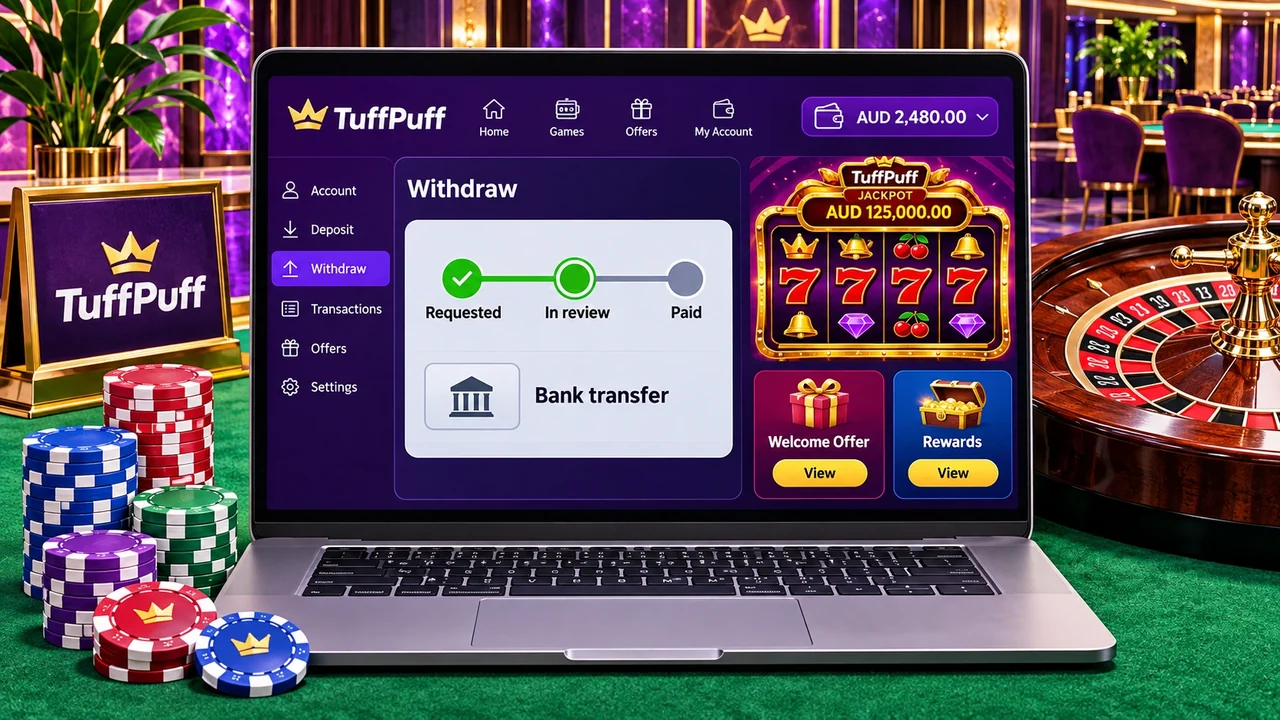
No method is safe in itself; each one moves the risk to a different place. The comparison below describes how the methods behave, not what any particular site charges.
| Method | Speed in | Who you see as payee | If something goes wrong | Pays out the same way? |
|---|---|---|---|---|
| PayID | Usually under a minute | Name registered to the PayID, shown before you confirm | No card-style chargeback; the bank can only attempt a recovery | Sometimes |
| Standard bank transfer (BSB and account) | Same day to a few days | Account details supplied by the site | Same as PayID | Often |
| Debit or credit card | Instant when accepted | A merchant name that may not mention gambling | Card dispute process exists, with conditions; many banks decline these payments | Rarely |
| Prepaid voucher | Instant | Nobody; you enter a code | Once the code is used it cannot be reversed | No |
| Cryptocurrency | Minutes, depending on the network | A wallet address | Irreversible; value moves with the market | Usually |
PayID's real advantages are speed, no card details handed to an offshore site and a payee name you can read first. Its real weakness is finality. You authorised the transfer yourself, from your own app, and banks treat that very differently from a card payment you dispute. The trade-offs of digital coins are covered on our crypto casino page.
Playing for real money at an offshore site means every protection you are used to in Australian consumer life has to be checked rather than assumed.
If a licensed Australian bookmaker refuses a payout, there is a state or territory regulator to complain to. If an offshore casino does, there is not. The Australian Financial Complaints Authority deals with complaints about your bank's conduct, not about a foreign casino's decision to void your winnings. Your options are the casino's own complaints process and, if it holds one, its overseas licensing body.
Money in a casino account is not held under Australian client-money rules. Keep the balance small and withdraw wins rather than leaving them to accumulate. A site that is slow or evasive with a small first payout will not improve with a large one.
Banks monitor payments for scams and unusual patterns. Repeated transfers to changing payees can trigger a call, a temporary hold or a block on a particular PayID. That is the bank protecting the account. Answer honestly; describing the payment as something else creates a bigger problem than the hold.
Because the name is trusted, it is used as bait. The casino-flavoured versions follow a few patterns.
If you have sent money to what you now think is a scam, call your bank straight away on the number on your card. Speed matters, because a recovery attempt only has a chance while funds are still in the receiving account. Reports can also be made to Scamwatch.

None of these steps makes an offshore casino a regulated one. They narrow the ways it can go wrong, and they give you a paper trail if it does. If what you want is a night at the tables with a regulator in the room, the licensed venues in our state-by-state list are the option Australian law provides. 18+ only; gamble with money set aside for entertainment.
Making a PayID transfer is legal, and the Interactive Gambling Act does not make it an offence for an individual to play. What the Act prohibits is providing online casino games to people in Australia, so the site itself is operating outside Australian law and without an Australian licence.
The transfer normally completes in under a minute once your bank releases it. First payments to a new payee can be held by the bank for extra checks. After the money arrives, the casino or its processor still has to match it to your account, which is what the reference code is for.
Only if the site offers it; some pay out by bank transfer or cryptocurrency instead. The receiving account must be in the same name as the casino account, and verification usually has to be completed first. The waiting time is mostly the casino's review period.
Not in the way a card payment can be disputed. You authorised the transfer, so the bank cannot simply pull it back. If you report a scam quickly the bank can ask the receiving bank to freeze and return whatever is left, with no guarantee.
Banks generally do not charge personal customers for sending PayID payments, though you should confirm with your own. A casino or its payment processor may apply its own fee or a minimum amount, which will be stated in the cashier.
Offshore casinos collect Australian deposits through intermediaries that hold local bank accounts. The name your bank shows belongs to that intermediary. It should still match what the cashier told you to expect; if it does not, do not send the payment.
What offshore sites offer instead is convenience in exchange for the entire protective structure described on this page: no Australian regulator, no complaints path that ends with an Australian body, and a cashier you cannot stand in front of. If you want to see exactly what that trade looks like in writing, an operator's own terms page names the overseas regulator that would hear a complaint — and reading that name before depositing is the whole decision. Our online legality guide covers the law in detail.
Advertisement
Walking into Crown or The Star gets you an Australian regulator, a complaints path and a cashier you can stand in front of. An offshore site gets you none of those. If you still want to compare, start with its terms page.
Compare the options